
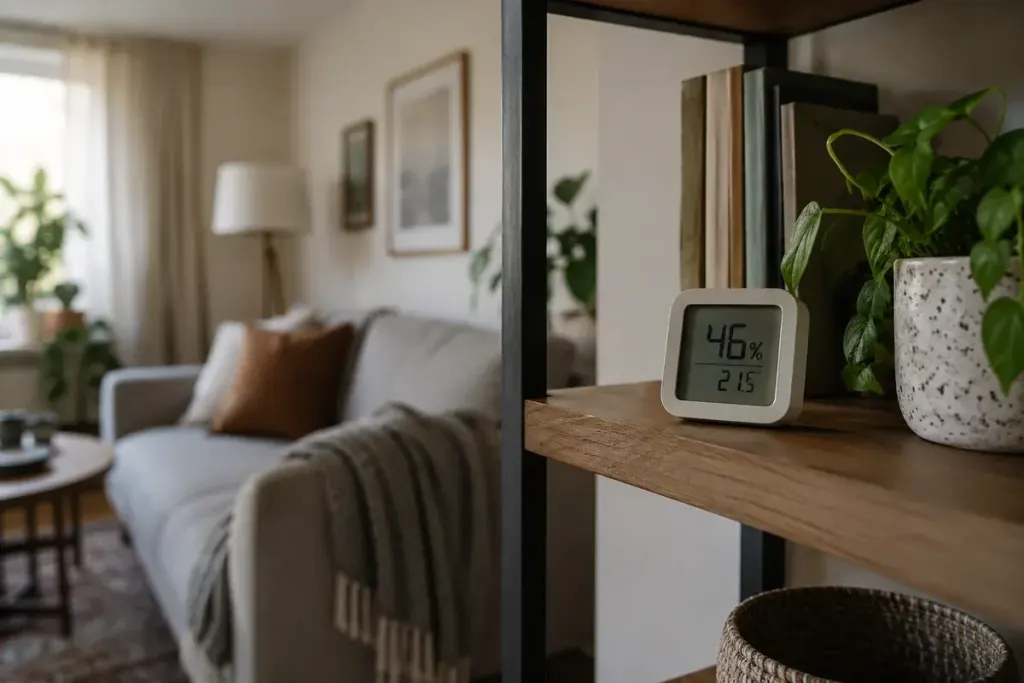
A humidity meter reads one number in the bedroom and a higher one in the bathroom after a shower. That difference does not automatically mean one device is broken. Location, timing and recent activity are part of the reading.
Before buying equipment or changing thermostat settings, collect enough context to distinguish a brief spike from a persistent moisture problem.
Give the number a location
Follow the meter’s placement instructions. Avoid treating a reading directly beside a shower, open window or heating outlet as representative of the whole home. Record the room and approximate position so later readings can be compared fairly.
Relative humidity also relates to temperature. Moving a device between rooms and reading it immediately can be misleading; allow it to settle according to the manufacturer’s guidance.
Keep a short observation log
For several ordinary days, note time, temperature if available, humidity and relevant activity. Cooking, showering, drying laundry and changes in ventilation can help explain a pattern. Include visible condensation, leaks or musty odours as observations rather than diagnoses.
A useful entry might be “bathroom, morning after shower, extractor running” followed by a later reading from the same position. This is more informative than collecting isolated high numbers without context.
Use guidance without turning it into a universal setting
The EPA’s home moisture guide recommends keeping indoor relative humidity below 60 percent and, where possible, around 30–50 percent. Climate, building conditions and individual equipment still need consideration; one number is not a complete assessment of a home.
Persistent moisture calls for attention to the source. Ventilation or dehumidification may help in an appropriate setting, but neither repairs a leaking pipe or water entering through the building envelope.
Take a useful record to a professional
If the pattern persists, share the log with a qualified HVAC or building professional. Include where condensation appears and when it occurs. Avoid opening equipment or altering controls beyond the manufacturer’s user instructions.
A log is not a laboratory measurement or a diagnosis of mould. Its value is practical: it replaces “the house always feels damp” with observations someone can investigate. That can make the next conversation more focused and help you judge whether a proposed change addresses the actual source of moisture.