
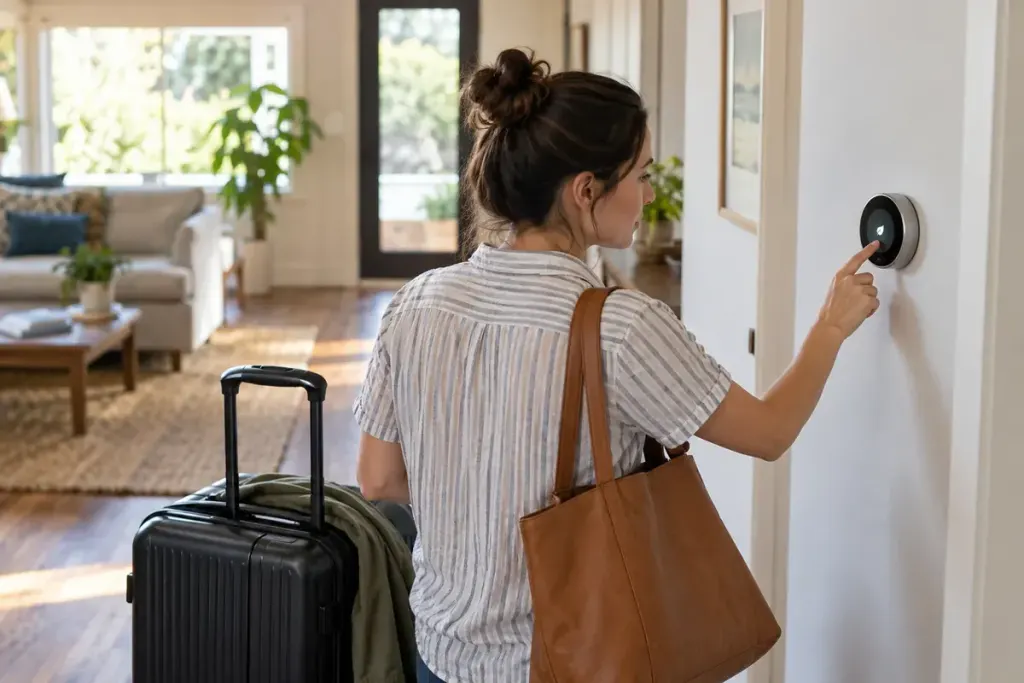
You set vacation mode for a trip, then return a day early to a house still following the away plan. The setting did exactly what it was told. The missing part was a plan for changed dates and the return to normal use.
Read what the mode actually changes
Check the manual for your thermostat and heating or cooling system. Identify the start and end time, temperature settings, whether the normal schedule resumes automatically and how to cancel the mode. Similar labels can behave differently across products.
ENERGY STAR’s heating and cooling guidance describes smart thermostats as tools for managing temperature settings. The right away settings still depend on the home, equipment, climate and anyone remaining inside. Do not copy a universal temperature from an unrelated household.
Account for the house that stays behind
Consider pets, plants, moisture concerns, pipe protection and any requirements in your property or equipment guidance. If a person will be staying or visiting, explain the controls and agree what they should do if the room is uncomfortable or a warning appears.
A phone app is convenient, but remote access depends on the device, connection and service working. Know the local control method and who can help if a fault develops while you are away.
Put the return in the calendar
Check the end date and time zone before leaving. If the trip changes, update the plan rather than assuming location detection will interpret every traveller’s movements correctly. Confirm the actual setting after making a remote change.
When you return, review the displayed mode and schedule. Do not repeatedly raise or lower the target to force faster recovery; follow the equipment’s instructions and seek qualified advice if it behaves unexpectedly.
A useful departure note contains the selected mode, end time, relevant household constraints and a contact for problems. That makes vacation mode a deliberate part of home care instead of a button pressed beside the front door while the taxi waits.