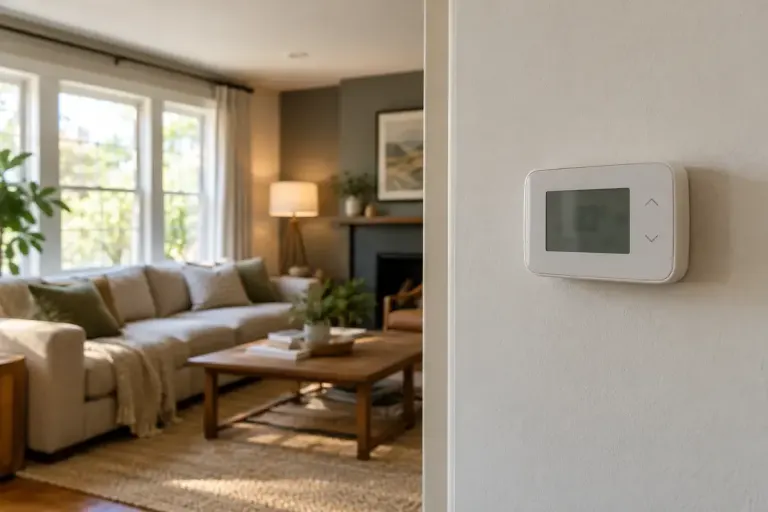
Thermostat Basics
A Thermostat Deadband Keeps Heating and Cooling Apart
Read a thermostat’s heat-cool separation in its own manual and distinguish the setpoint gap from other switching behaviour before adjusting settings.

Everyday questions about heating, cooling and indoor comfort.
Read a thermostat’s heat-cool separation in its own manual and distinguish the setpoint gap from other switching behaviour before adjusting settings.
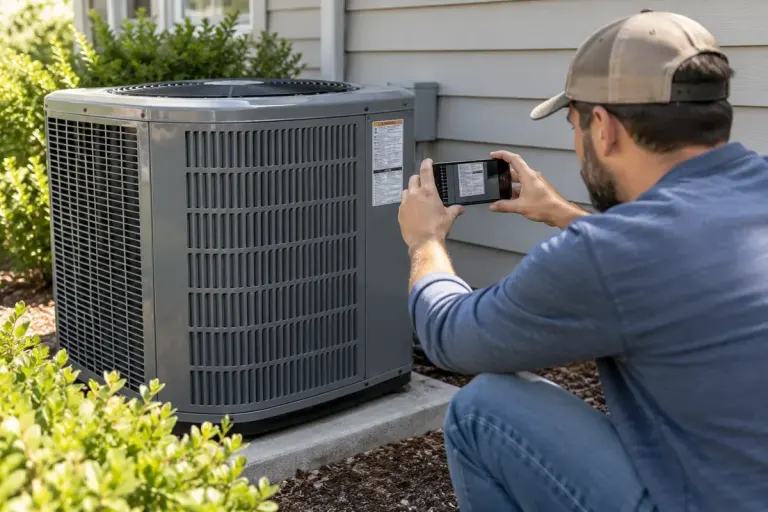
A clear photograph of an accessible HVAC nameplate helps identify the equipment. Capture the model and serial information without opening panels or approaching hazards.
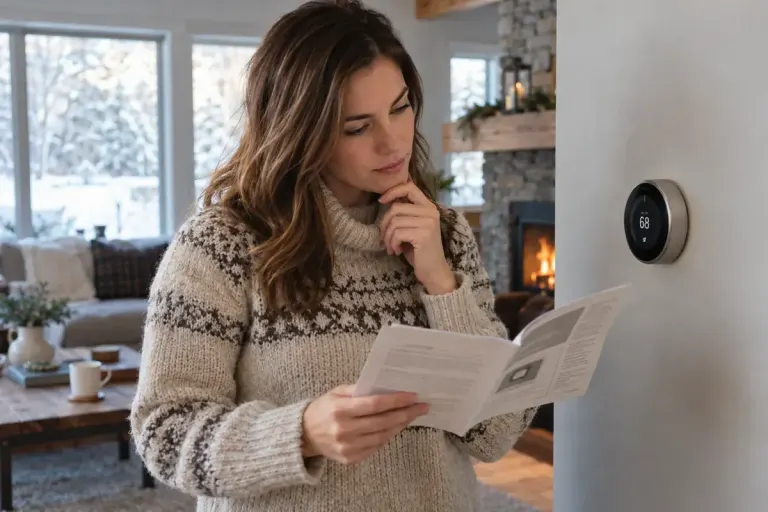
Understand the role of Emergency Heat on a heat-pump system and check the equipment instructions before treating it as a normal comfort setting.

A remote temperature sensor changes the measurement a compatible thermostat follows; it does not automatically create separate heating or cooling zones.

Check the dates, occupancy and equipment instructions behind a thermostat’s vacation setting, including how normal operation resumes when you return.
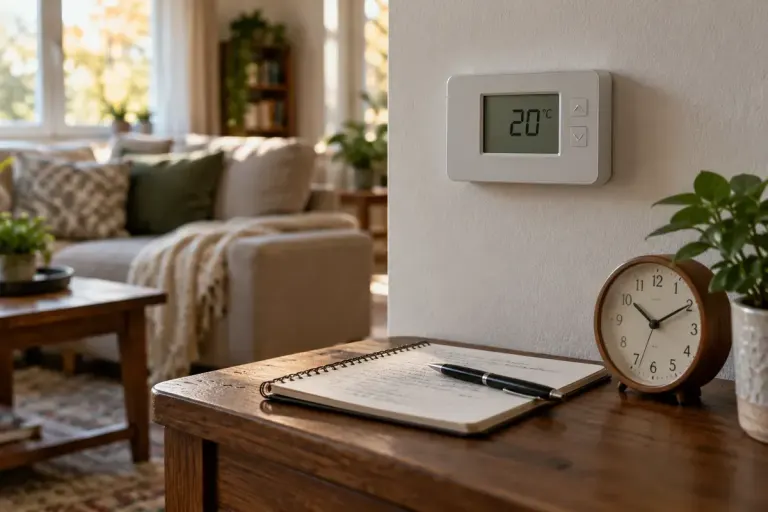
Record starts, stops, room conditions and visible messages before a service call, without opening heating equipment or repeatedly resetting a fault.
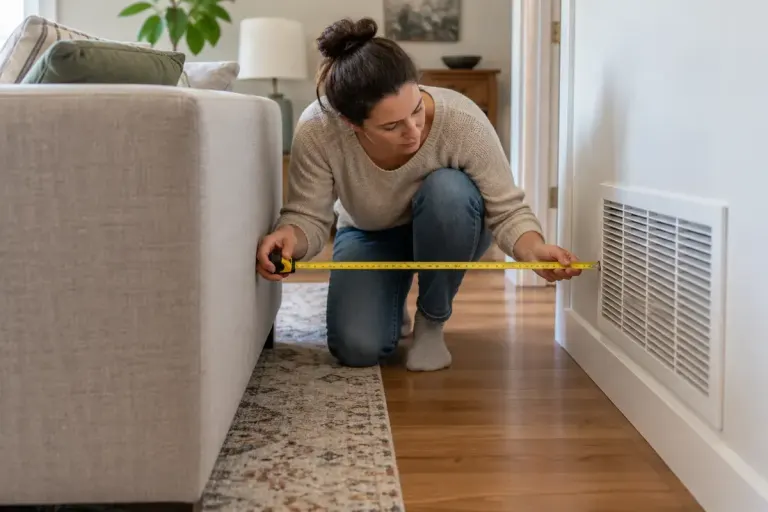
Before changing thermostat settings, check whether furniture or stored items are obstructing a return-air grille and document persistent comfort problems.
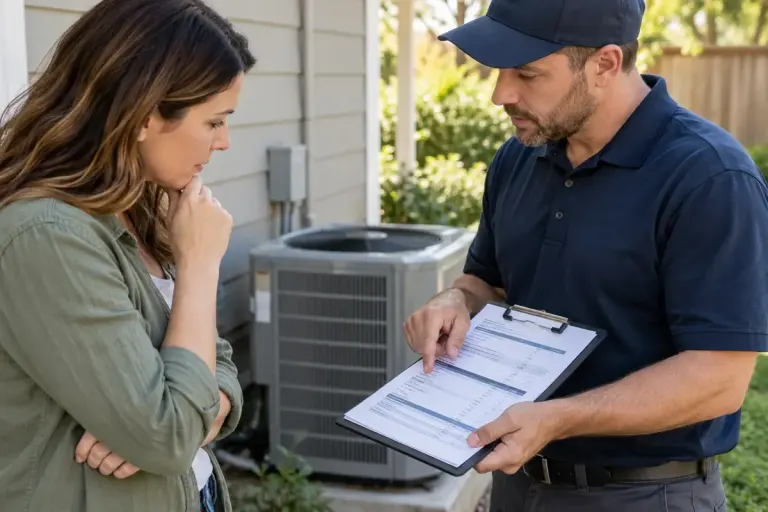
Compare HVAC estimates by equipment, installation scope, commissioning and exclusions so a low total does not hide work that another quote includes.

Understand why a ceiling fan can improve comfort without lowering the room’s air temperature, and use it where people actually benefit.