
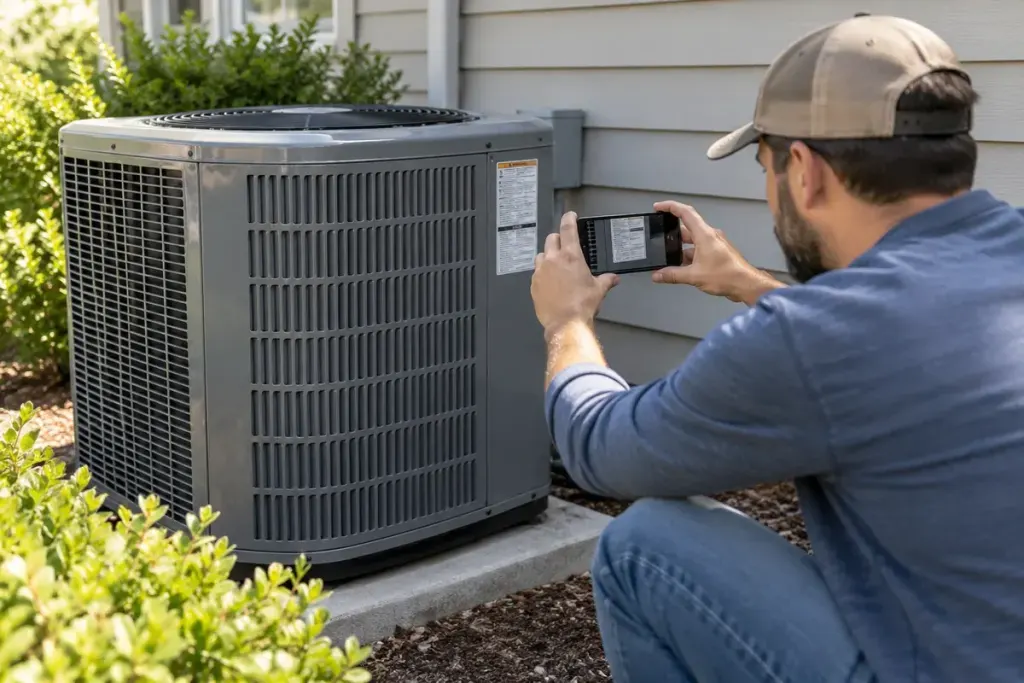
You call for service and describe the air conditioner by its brand and colour. The technician asks for a model number. A brand can cover many different units, so the equipment label often provides a much better starting point.
Use only a safely accessible label
Look for identification on the closed exterior where it can be reached without climbing, removing covers or touching electrical components. If the label is not safely accessible, leave it for the technician. Do not open a panel simply to improve a photograph.
Take one image showing the unit and another showing the label clearly. Check the photograph before stepping away: glare, shadows and motion blur can turn a letter into a number. Keep the full label in the frame rather than cropping away information you assume is unimportant.
Identify which unit you photographed
A system can include separate indoor and outdoor equipment with different model and serial numbers. Tell the service company which label you have. Do not assume the number on a thermostat identifies the entire heating or cooling system.
Keep any installation paperwork or earlier service record available, but distinguish it from the label on the equipment currently present. Components may have been replaced since an old invoice was issued.
Send it through the agreed contact
Ask the service company how it wants the image delivered. Avoid posting identifying labels and household details publicly when a private service channel will do. Include the symptom and when it occurs; the nameplate identifies equipment but does not diagnose the fault.
Do not use the label’s electrical or refrigerant information as a DIY repair instruction. Qualified assessment is still needed. The benefit of a clear photograph is practical: it can help the service team prepare, check documentation and avoid guessing which of several similarly named models is at your home.