
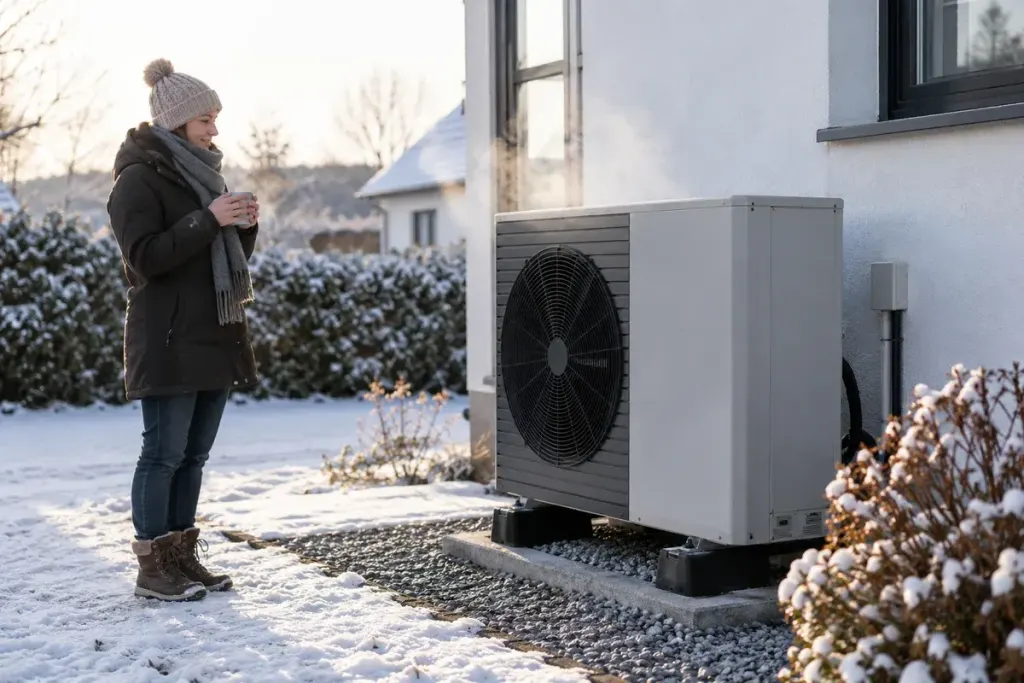
A cloud rising from the outdoor heat-pump unit on a cold morning can look alarming. In some circumstances it is steam associated with a normal defrost cycle. That explanation is useful, but it should not become a reason to dismiss every unusual smell, noise or persistent build-up of ice.
Heat pumps operating in heating mode can develop frost on the outdoor coil. The equipment may periodically run a defrost process to clear it. Exactly how the cycle behaves depends on the model and conditions.
Observe from a safe distance
Trane’s homeowner repair guide describes steam during defrost as a normal possible observation. Check the owner’s manual for your own equipment rather than assuming all systems follow the same timing or sequence.
Notice whether the event is brief, whether normal heating resumes and whether ice clears. Record the outdoor conditions and any displayed fault code. A short description or safely taken photograph can help a qualified technician understand an intermittent issue.
Do not open electrical panels, reach into the unit or chip ice from the coil. These actions can cause injury or damage. Keep the area clear according to the manufacturer’s instructions, and use professional service for suspected faults.
Know when the normal explanation is not enough
Persistent or increasing ice, reduced heating, repeated fault messages or an unusual ongoing noise deserves attention. A burning smell, smoke or signs of an electrical problem should not be labelled “just defrost.” Follow the equipment’s emergency instructions and seek appropriate assistance if the situation seems hazardous.
- Identify the model and find its manual.
- Note when the behaviour occurs and how long it lasts.
- Check whether heating returns to normal.
- Report recurring or worsening symptoms to a qualified technician.
Avoid changing multiple thermostat settings to see whether the cloud disappears. That can obscure the sequence and make the system’s behaviour harder to describe. If the manual recommends a specific user check, follow it carefully within its limits.
Understanding defrost helps homeowners avoid unnecessary alarm while still recognising when something needs investigation. The useful distinction is between a documented operating behaviour and a symptom that persists, changes or comes with other warning signs.