
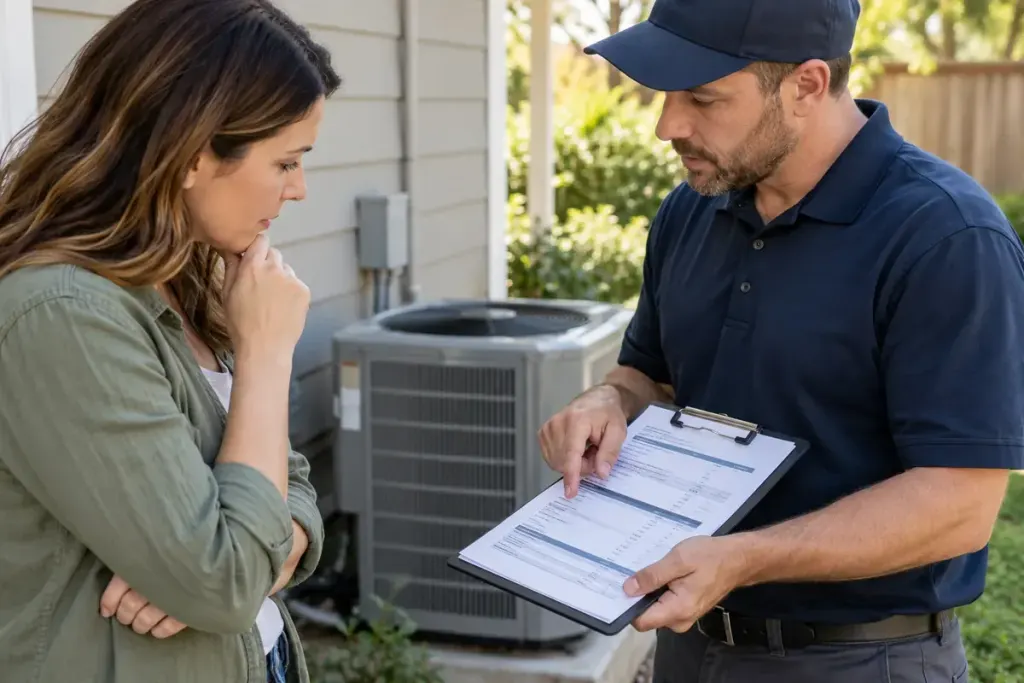
Two HVAC proposals can name similar equipment and still describe very different jobs. One may include duct repairs, electrical work and commissioning; another may cover only replacing the indoor and outdoor units.
ENERGY STAR recommends written, itemised estimates and a home evaluation when choosing a heating and cooling contractor. Comparing the scope gives those totals meaning.
Equipment and design
Ask for exact model numbers and an explanation of how the system size was determined for the home. Record any assumptions about insulation, windows or existing ductwork. A bigger unit is not automatically the better answer, and an old unit’s label alone does not explain the home’s current needs.
Work around the equipment
Identify what is included for connections, controls, condensate drainage, access, removal of old equipment and any necessary supporting work. Ask who is responsible for permits and inspections where required. Requirements vary by location; the proposal should explain the contractor’s responsibility rather than leave you to infer it.
Have exclusions written down. If hidden damage or an unsuitable existing component could change the price, ask how that finding will be documented and approved before extra work proceeds.
Completion and support
Ask what checks will demonstrate that the installed system is operating as intended, what records you receive and how the controls will be explained. Separate manufacturer equipment warranties from the contractor’s labour or workmanship coverage, including any registration or maintenance conditions.
Put the proposals side by side using the same headings. Mark an unanswered item as unknown rather than assuming it is included in the cheaper quote. Then ask each contractor to clarify the gaps in writing.
This comparison does not require you to design the system yourself. It helps you understand what you are purchasing and makes the final discussion about a defined installation, rather than a competition between two unexplained totals.