
The thermostat can appear to work normally while water collects where it should not. An air conditioner removes moisture from indoor air as it cools. That moisture needs a reliable route away from the equipment, usually through a condensate drain and, in some installations, a pump.
This makes the drain worth discussing before the busiest cooling weather. You do not need to dismantle the system to make the conversation useful. You need to know what belongs to your installation and what a change looks like.
Ask the technician to show you the water’s route
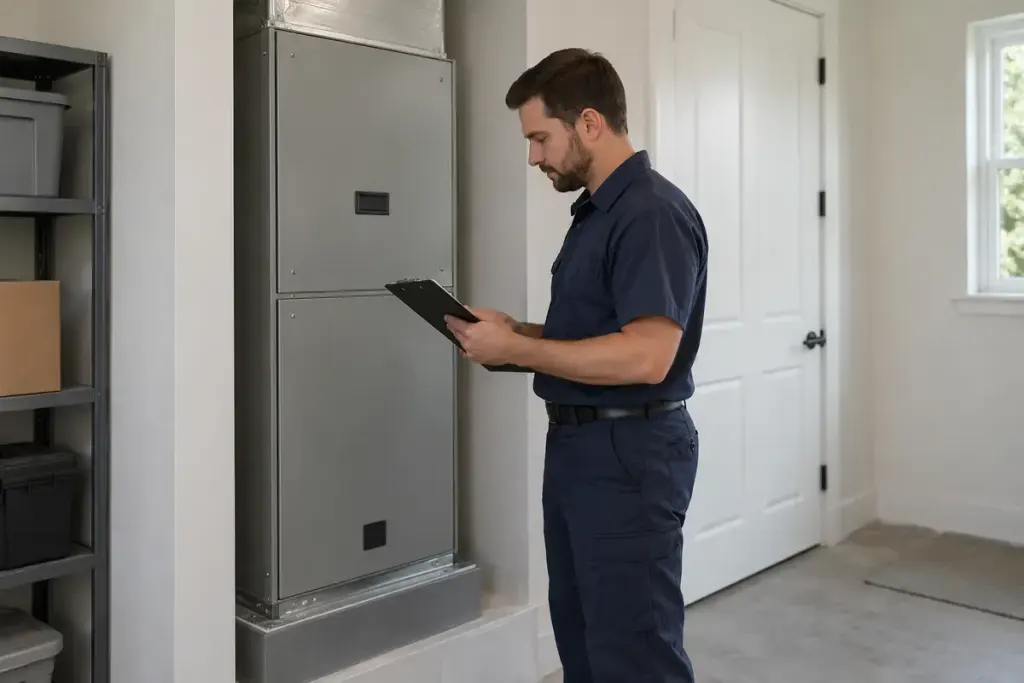
At the next service visit, ask where condensate collects, where it exits and whether the installation has a pump or overflow protection. Take a photograph of the accessible exterior arrangement with the technician’s explanation. Keep equipment covers closed and avoid touching wiring or moving parts.
Ask which observations are normal during operation. A dry outlet at one moment does not, by itself, diagnose a blockage; operating conditions and the installation matter. Conversely, recurring water near an indoor unit deserves attention even if the room still feels cool.
Make a useful service report
Record when the water appeared, whether cooling was running and whether any ceiling mark or nearby material became damp. Photographs taken from a safe position can help explain the location. Do not repeatedly restart equipment that has stopped on a protective control.
Carrier’s drain-line guidance recommends professional attention for signs of a condensate blockage. A leak is not proof of one particular fault, so resist pouring a household chemical into an unfamiliar pipe or bypassing a safety switch.
If water is approaching electrical equipment, keep away and arrange qualified help. For an ordinary service appointment, request an explanation of the cause, the repair and the maintenance appropriate to your model.
Before the technician leaves, return to your original photograph. Being able to identify the drain and its normal condition is more valuable than memorising a cleaning recipe that may not suit your system.