
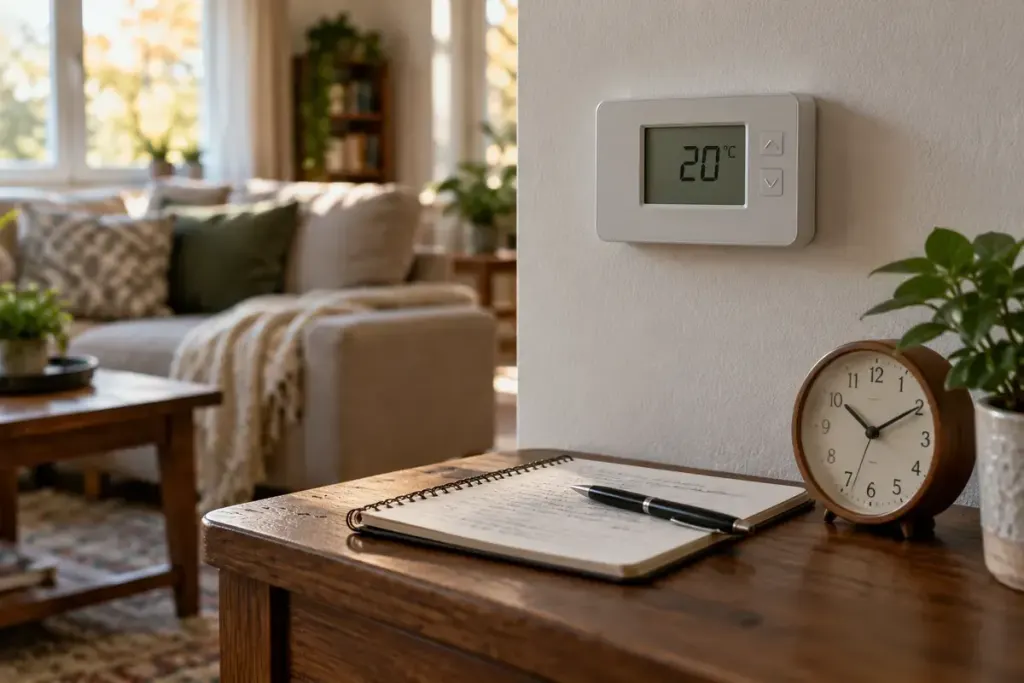
The heating seems to start, stop and start again. That observation matters, but it is not yet a diagnosis. Different systems and control arrangements behave differently, and a technician needs more than the phrase “it keeps cycling.”
Build a short timeline
Note the time the behaviour begins, the thermostat’s set temperature, the displayed room temperature and any visible message. Record whether the system is heating the space, producing hot water or responding to a scheduled change, where that information is available through ordinary owner controls.
Describe the sound or indicator you are using to identify a start. A fan running is not always the same event as a burner or compressor starting. If you are unsure, say exactly what you can hear or see rather than labelling the component.
Keep the observation safe
Do not remove covers, bypass controls or repeatedly reset a fault to continue the experiment. Follow the owner’s manual and arrange professional attention for persistent abnormal behaviour. If there is a gas smell, smoke or a carbon-monoxide alarm, follow emergency guidance and leave the observation exercise behind.
Check only routine owner items the manual permits, such as whether a programmed schedule has recently changed or an accessible filter is due for attention. Avoid applying a generic cycle-time threshold from the internet to equipment whose normal operating pattern you do not know.
An illustrative service note might read: “From 7:10 to 7:25 the fan repeatedly stopped and restarted. The thermostat stayed at the same setting, and message X appeared.” Add the equipment model and whether the behaviour is new.
Ask the service provider what additional information would help and whether the system should remain in use while waiting. A concise timeline can make the visit more productive, especially if the fault is intermittent. It also prevents a series of guessed adjustments from erasing the conditions under which the problem first appeared.