
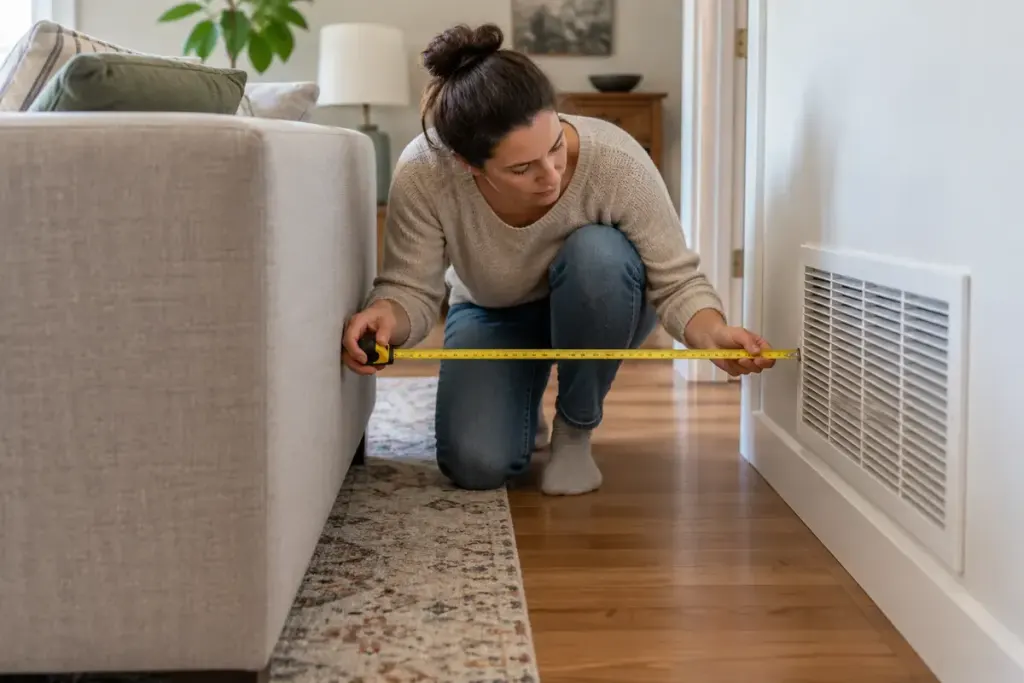
A new cabinet fits neatly against the wall, but it now sits in front of a large grille. The room feels less comfortable, so the thermostat gets adjusted again. Before changing another setting, check whether the furniture has interrupted an air path the system needs.
Identify the opening before changing it
A supply outlet delivers conditioned air; a return opening provides a route back toward the system. The arrangement varies by building. If you are unsure which opening you are looking at, consult the system information or ask a qualified technician rather than removing parts or blocking openings experimentally.
The US EPA’s occupant guide to indoor air quality advises keeping supply vents and return grilles clear of furniture and equipment. Although the guide addresses offices, it provides a useful reminder to notice airflow when arranging a room.
Do a simple visual walk-through
- Look for furniture, curtains, boxes or a rug covering an opening.
- Check whether a recent room rearrangement coincided with the complaint.
- Note unusual noise and whether the problem changes when an interior door is open or closed.
- Keep access available for the maintenance tasks specified for your system.
There is no single clearance measurement that suits every return grille and installation. Follow the equipment and installation guidance. Do not add a decorative cover, extra filter or improvised screen without checking whether it is suitable.
Describe the problem instead of guessing the repair
If clearing an obvious obstruction does not resolve the issue, record the affected room, time, thermostat setting and conditions. A technician can use that information to investigate filtration, ductwork, controls or other causes. A clear grille does not prove the whole system is working correctly.
For a rented property, report the observations to the responsible maintenance contact. Keeping an air path open is a sensible housekeeping step; altering ducts or equipment is a separate job.